Are Maine Coons Good Apartment Cats?
Gentle Giants, Curious Coons, Coon-dogs, Maine Coon cats have a lot of nicknames created from the love of the Breed. They’re one of the oldest breeds in North America and they’re popular for a reason, therefore, with more and more people living in smaller living spaces, there are always questions associated with owning a Maine Coon in a home such as these.
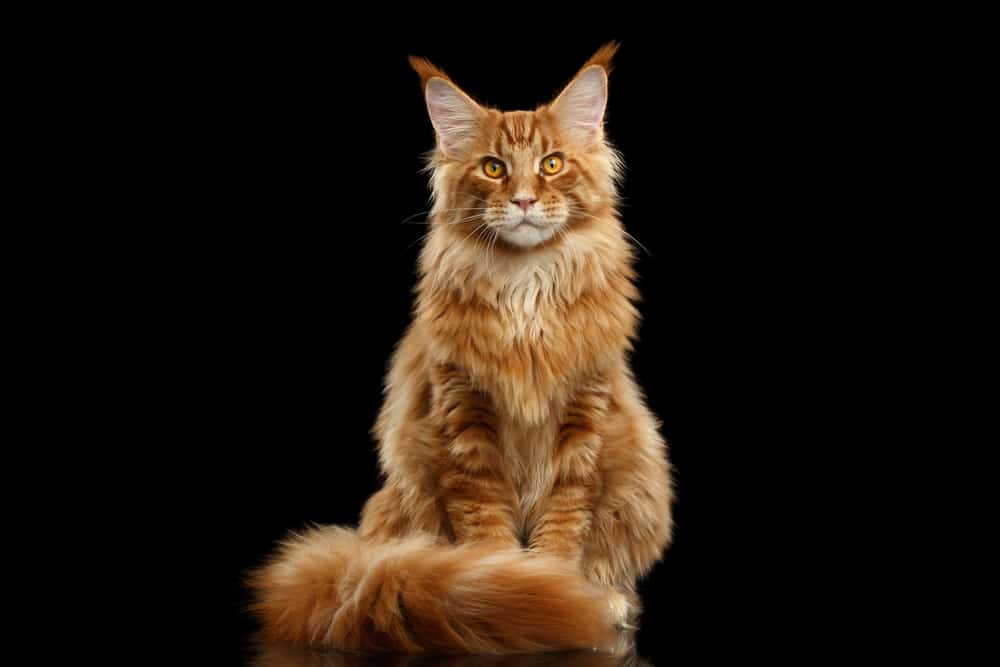
Maine Coon cats are typical to be known to be very large cats (some can grow up 8kg!), therefore, there is some hesitation from some cat owners moving to smaller living spaces such as an apartment.
So it begs the question, are Maine Coons good apartment cats? Despite being one of the largest cat breeds, Main Coon cats are very flexible when it comes to their living arrangements and can live very well in small homes such as studio apartments. They do have more dog-like qualities that lend well to being an indoor apartment or house cat – obedient and very sociable. One concern is that they’re very vocal, which might be a negative for people that want quieter cats in their apartments (either due to neighborhood complaints or other sound-related reasons)
Pure-bred Maine Coon cats are not only expensive but can also be a passive breed that is prone to trusting strangers because of their social nature, therefore exposing them to risks such as being stolen or worse. Thus, many people are advocates of keeping their Maine Coons as indoor cats.
Maine Coon Cat Apartment Guide
This article is meant as a reference point for this breed. Their breed lets us predict their behaviors but in the end, based on the cat’s environment or the way they were socialized, the cats might have some different traits or characteristics.
How Much Space Does a Maine Coon Need?
A Maine Coon is still a cat (albeit a very large cat) and that means they don’t need as much space as a similar-sized dog. Cats are territorial and in a smaller space – Maine Coon cats can more easily feel confident in their space much like any other cat would.
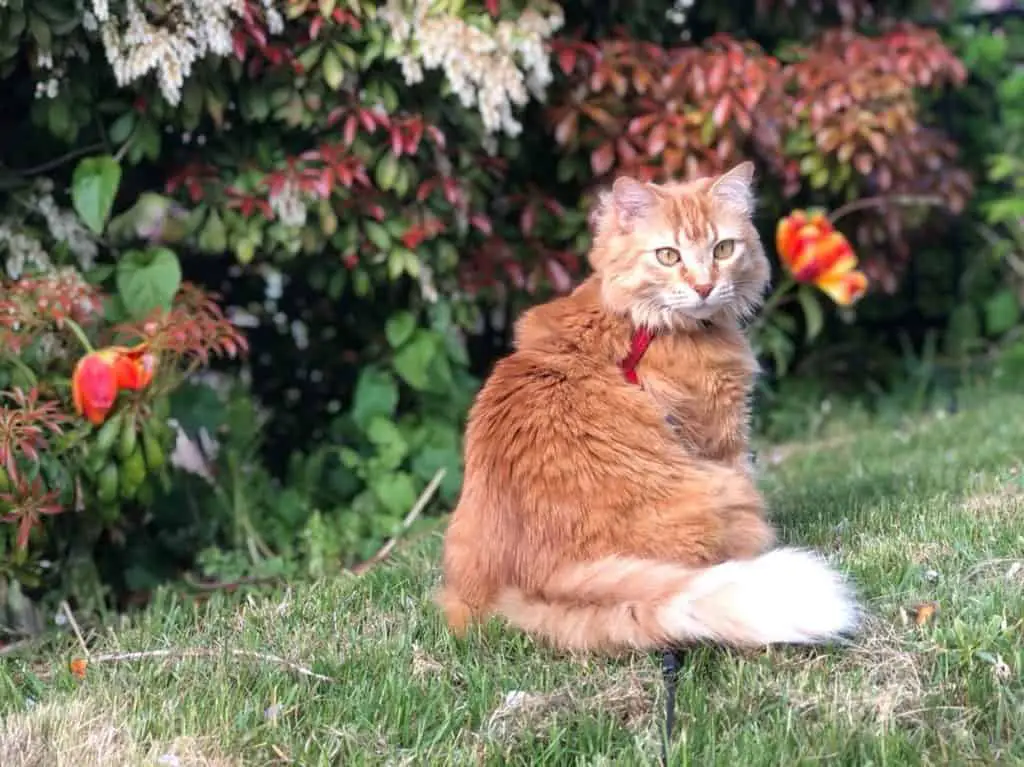
In terms of the size of an apartment – a Maine Coon would need an apartment of at least 20 square meters. With some catification, an apartment of that size would be very adequate for a Maine Coon.
While Maine Coons are not super active like other cat Breeds like the Bengal cat, because of their large size, some considerations and compromise should be made in small apartments. Keep items secure and the area largely uncluttered. When a Maine Coon gets going, it can seem like there’s a lion running around in the room so preventing things from being knocked over/broken is important in avoiding frights and injury.
Maine Coon Temperaments in an Apartment
Gentle giants are probably the most accurate description of the Maine Coon. They’re likely to follow their masters around most of the day and just be around the vicinity.
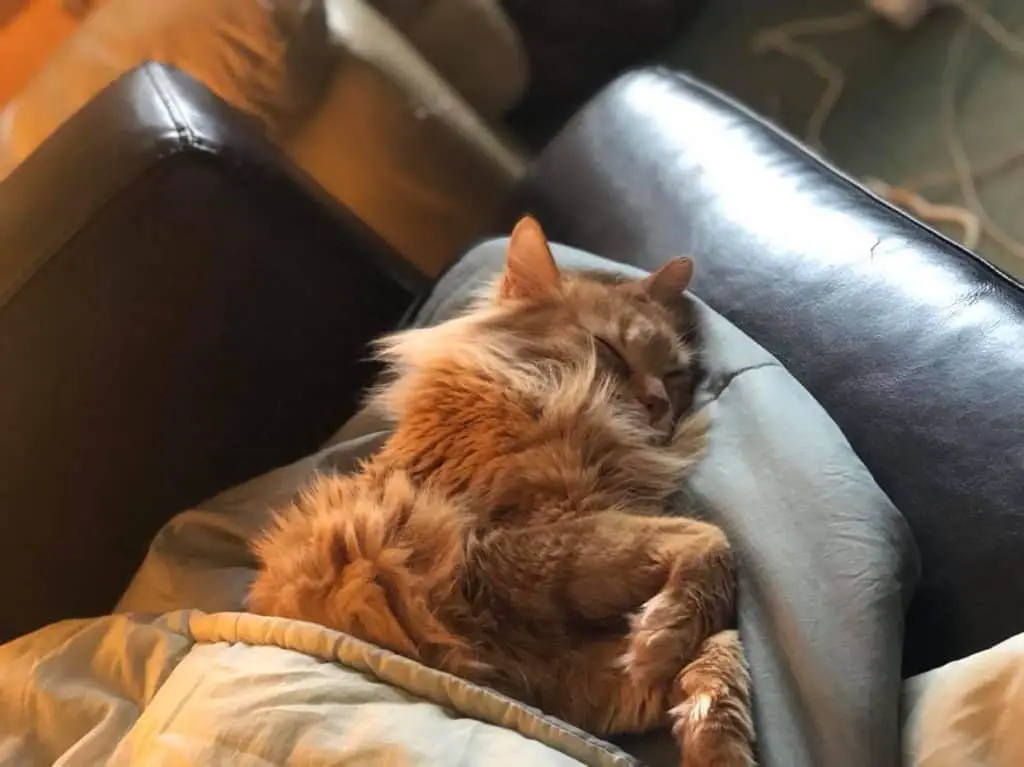
They’re also known to be very vocal. Therefore, it’s great fun interacting with them – they trill, chirp, and meow to express themselves. They’ll also let you know when they’re bored, so be prepared to give them a good play session when they start howling. However, being vocal can have drawbacks for people living in apartments with thin walls as they can be quite loud during their vocal sessions.
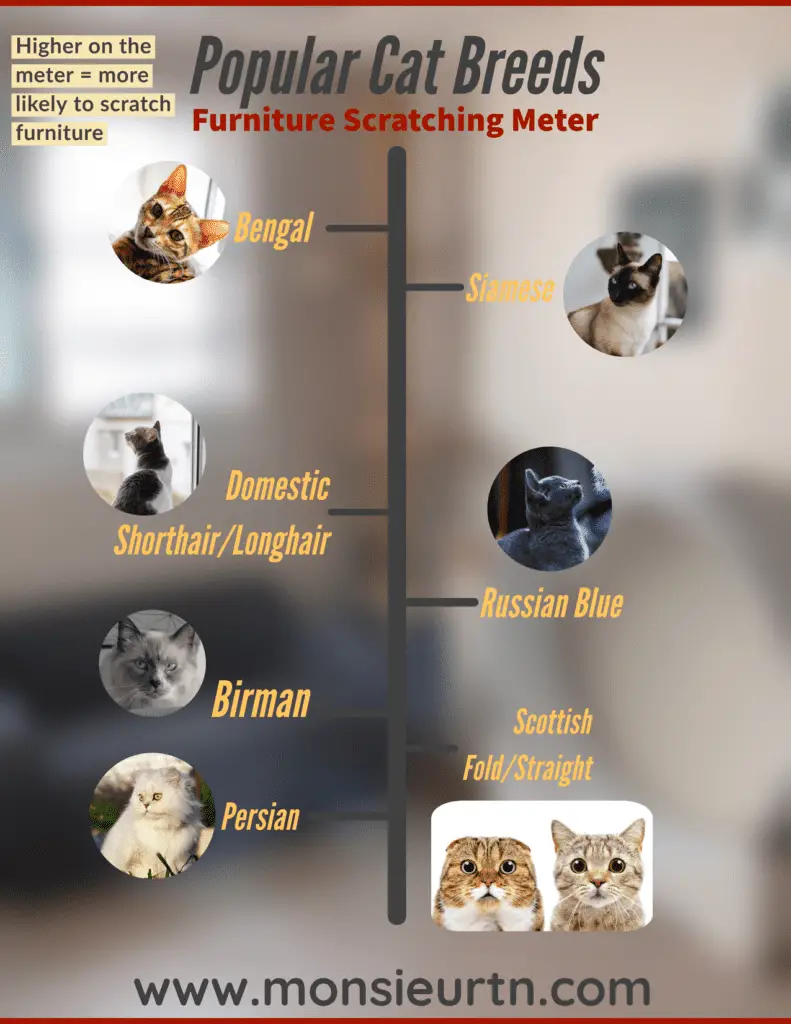
Maine Coons are curious but not destructive. They’re able to learn quickly about what is expected of them, especially if they were socialized and trained well during their kitten years. Below is a chart on how likely a cat might scratch things depending on its Breed. The Maine Coon has about the same likelihood as the Russian Blue cat to scratch or be destructive with furniture. Curious, but they learn quickly about what is right and wrong.
The Maine Coon is also a predictable cat, most of the time you’ll find them lounging on their favorite cat perch/bed or in between your feet under the covers. They’re great with family and other pets as well. Again, just very gentle towards everything that they interact with.
What Are Maine Coon Risks in Apartments
The Maine Coon has a few risks that they have to deal with in apartments that their owners have to look out for. Here are the most common risks:
- Obesity and Overeating – being the large cats that they are, they can eat quite a lot especially when they’re young. However, as they develop into adult cats, overeating can lead to being overweight. Therefore, it’s recommended to keep their nutrition and portions in check. Don’t free feed, schedule mealtimes for your Maine Coon.
- Boredom and Lethargy – a risk that most indoor cats have to deal with. Play with them often and create a schedule so that they’re used to being active throughout the day.
- Coat Health and Hairballs – The Maine Coon is a long-haired breed, which means that it needs regular grooming and management to prevent mats and so that it can maintain its hygiene.
How to Keep a Maine Coon Happy in an Apartment
As with most cats, Maine Coons benefit from a routine. Having a routine for their exercise, meals, and snacks will allow them to lead a stimulating, engaging and healthy lifestyle in an apartment. For more information about engaging cats indoors, read my article: Entertaining Cats Indoors.
In terms of play, from what I have observed, Maine Coon kittens will play with everything when they’re young but as they get older – it’s a bit more difficult in finding toys that they will react well to. Take notes of what type of toys (size, texture, sounds, etc.) that they enjoy the most and find those types of toys for them as they get older.
Maine Coons, like most cats, will respond to interactive toys the most (wand & feather toys). They love playing games of hunt and chase but make sure to also find one that is strong and durable as many Maine Coon owners will note – they will go through cheap toys like crazy. When they play, they go all out.
Apartment Essentials for Maine Coon Cats
Maine Coons are heavy, muscular cats. This means that they require high-quality and sturdy cat equipment so that it can support its weight. Why is this important? Cats don’t use what they feel is unstable and not secure, therefore, they might direct their cat behaviors such as scratching towards other things in the home (like our sofas). Having the right products for your Maine Coon is important for them to develop into well-behaved, socialized, and healthy cats.
For the full list of recommended cat supplies that I personally curate and update regularly visit: Recommended Cat Apartment Supplies
Sturdy Cat Furniture
Weight Management
Food puzzles are the number one thing I recommend for weight management and for general engagement during mealtimes. It prevents our cats from devouring everything so fast and they return often to “forage” for their food, so it’s a great tool to keep them busy throughout the day.
Fur and Coat Management
Again, coat and hair management is important for this breed. Choosing the right brush will help in keeping the Maine Coon’s coat beautiful and keep the hair off of other things in the apartment.